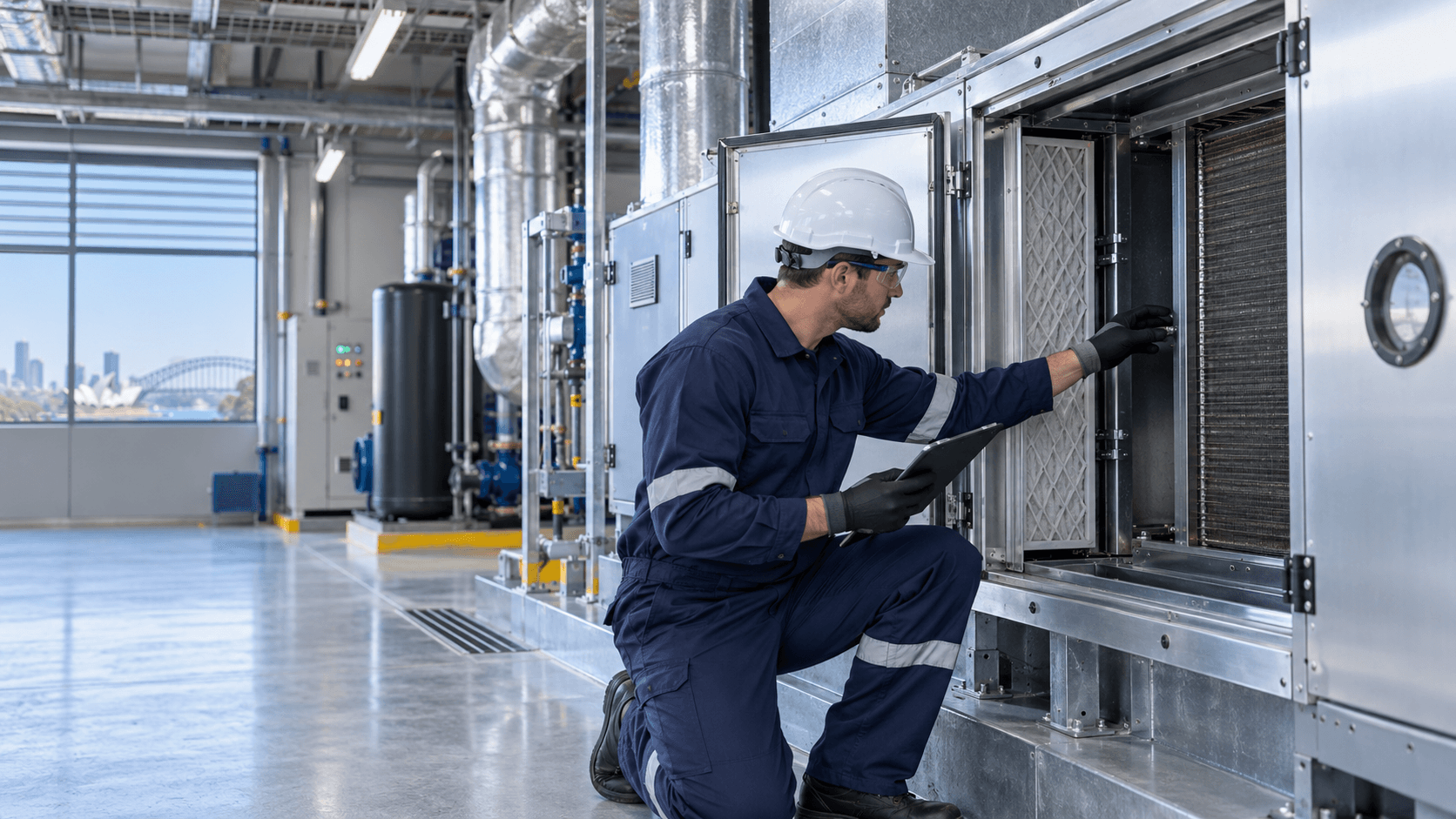
Clean air systems are not just a maintenance issue. For commercial buildings, hospitality venues, clubs, shopping centres, healthcare sites and other high-occupancy facilities, HVAC hygiene sits at the intersection of operational performance, fire risk, workplace exposure and compliance evidence. AirDuct’s September 2026 Hygiene Newsletter highlights three developments that facility and operations teams should be acting on now.
1. Workplace exposure limits change on 1 December 2026
Safe Work Australia has advised that the new Workplace Exposure Limits list takes effect on 1 December 2026. Until then, workplaces continue to use the current Workplace Exposure Standards list.
For facility managers and maintenance teams, this is a timely prompt to review airborne-contaminant risks, local exhaust systems, filtration, maintenance evidence and whether air monitoring is required for specific work environments.
Practical action: Review ventilation and exhaust performance before the new limits take effect, particularly where dust, fumes, vapours, cooking emissions or other airborne contaminants may be present. Maintenance records should clearly show what was inspected, cleaned, serviced and verified.
2. Grease residues remain a practical restaurant fire risk
Commercial kitchen exhaust systems accumulate grease progressively. Fire and Rescue NSW identifies ignition of fatty residues in range hoods and ducting as a common restaurant-fire scenario. A cleaning program should therefore cover the complete exhaust path:
• Canopy and hood surfaces
• Filters and plenum areas
• Accessible grease ductwork
• Exhaust fan and housing
• Access limitations, defects and residue conditions
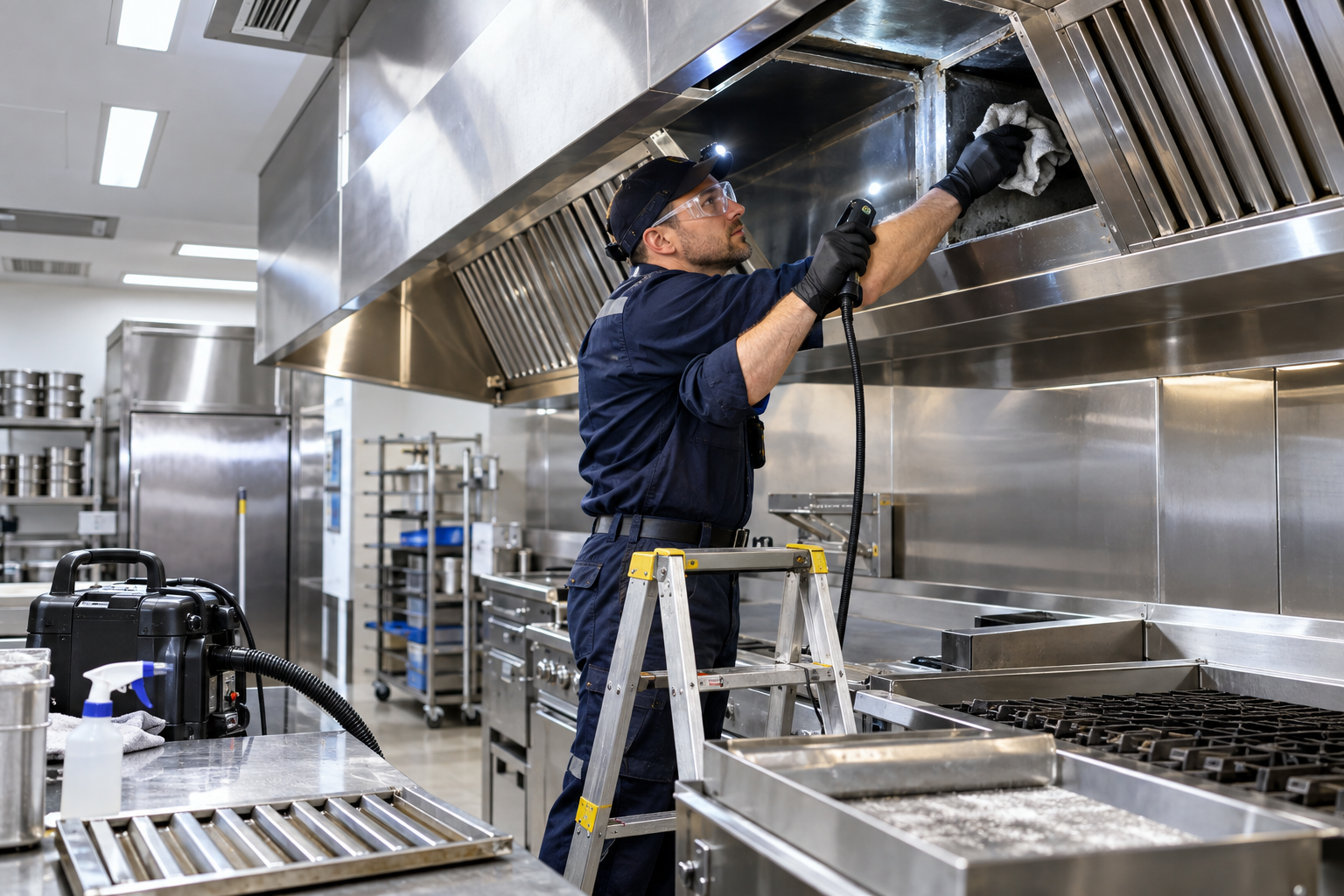
Why this matters: Grease accumulation can affect hygiene, airflow and fire risk. A documented cleaning scope, supported by before-and-after photographs, provides stronger evidence than a superficial clean alone.
3. AS/NZS 3666: understand the four-part compliance map
AS/NZS 3666 addresses microbial control in building air-handling and water systems. The relevant part depends on the system, work and jurisdiction:
• Part 1 — Design, installation and commissioning
• Part 2 — Operation and maintenance
• Part 3 — Performance-based maintenance of cooling-water systems
• Part 4 — Performance- and risk-based maintenance of air-handling systems
AIRAH DA19 (2019) is also a widely used Australian HVAC&R maintenance guide covering maintenance schedules, operation and maintenance records, asset management and risk-based maintenance.
A five-point HVAC hygiene check before your next inspection
1. Confirm the entire exhaust path
Include canopy, filters, plenum, accessible ductwork and fan—not only visible surfaces.
2. Look for operating signals
Record odour persistence, grease migration, airflow complaints, unusual noise, vibration and residue.
3. Match timing to risk
Review cooking volume, fuel type, operating hours, previous findings and insurer or site requirements.
4. Protect access and shutdown windows
Confirm roof, ceiling and plant access, isolation arrangements, permits and the least-disruptive service window.
5. Close the evidence gap
Retain dated photos, completed scope, access limits, defects observed and recommended next actions.
Build a stronger hygiene and compliance record
A well-maintained HVAC or kitchen exhaust system should be supported by evidence. AirDuct Commercial HVAC Services provides commercial HVAC cleaning, kitchen hood and exhaust cleaning, duct hygiene, exhaust fan cleaning, indoor air-quality assessment and compliance-focused reporting for commercial facilities across Australia.
For an inspection or tailored maintenance scope, contact AirDuct:
M 0483 747 227
E Airduct.Admin@airducthvac.com
Verified references
1. Standards Australia — AS/NZS 3666.1:2011, design, installation and commissioning.
2. AIRAH — Module 5: AS/NZS 3666 application and four-part structure.
3. NSW Health — Legislation on Legionella control and NSW cooling-water regulatory context.
4. AIRAH — DA19 HVAC&R Maintenance, fourth edition, 2019.
5. Safe Work Australia — Workplace Exposure Limits: airborne contaminants.
6. Fire and Rescue NSW — Restaurant fire safety.
General information only. Applicability varies by system, contract and jurisdiction. Confirm duties with the responsible duty holder and appropriately qualified advisers. AirDuct service records can support maintenance evidence but do not replace regulatory certification where separately required.